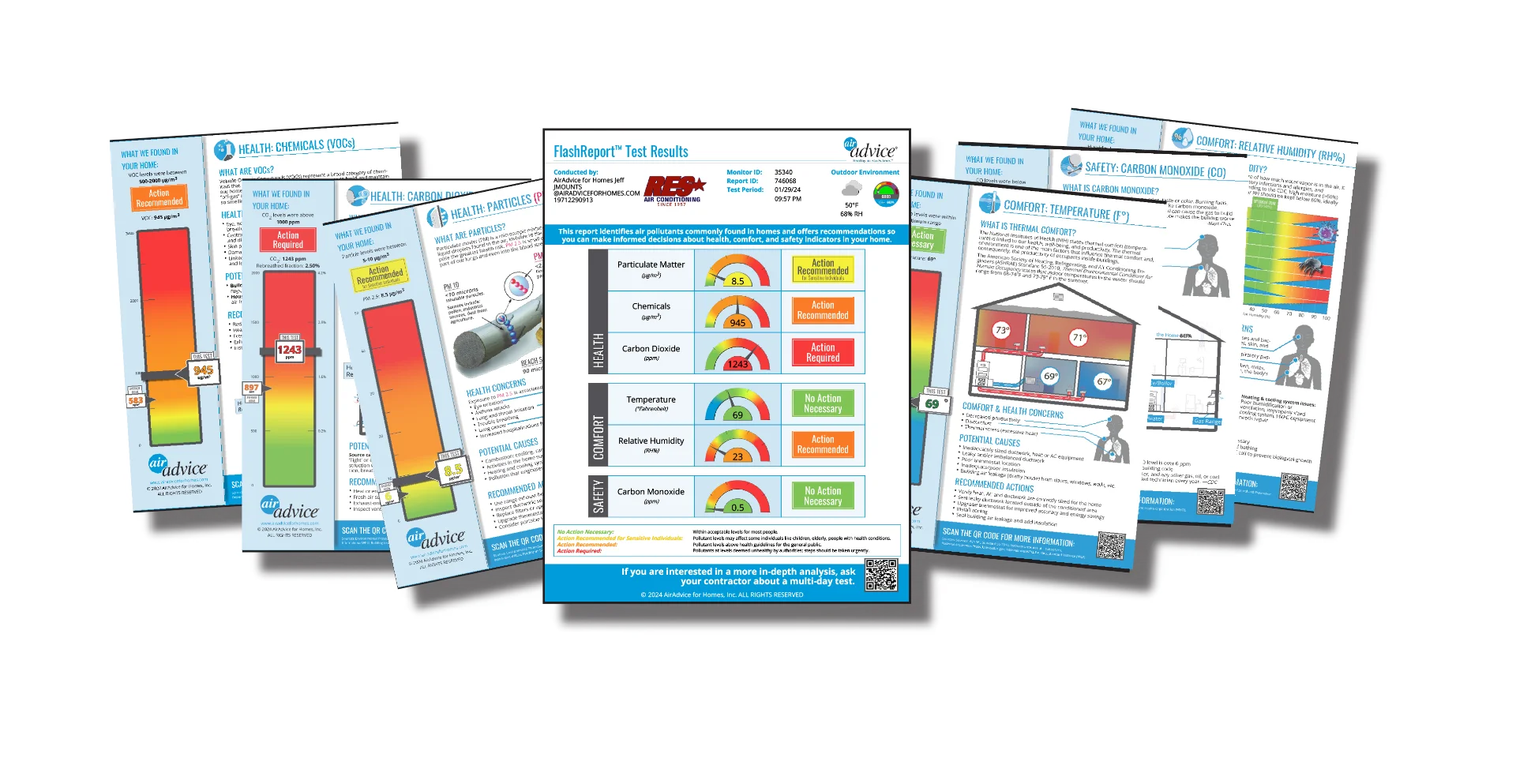
NEW: Air Monitoring and Report for your Home

Air Advice Monitor

Understanding Indoor Air Quality

Americans spend approximately 90% of their time indoors, averaging 54 years inside a residence. Managing the air quality of this environment directly affects occupant health.

Contractors provide specific recommendations to manage indoor air pollutants. Complete eradication of indoor air pollutants is impossible. Active control and mitigation are the objectives.

Ways to Improve IAQ

  • Select low-VOC products and natural cleaners.
  • Run kitchen exhaust fans when cooking.
  • Run bath fans to remove moisture.
  • Operate a HEPA vacuum cleaner.

Do I Need an IAQ Test?

The EPA identifies indoor air pollution as one of the top five environmental risks to public health. It contributes to respiratory tract infections, asthma, lung cancer, and exacerbated allergy symptoms. Populations at higher risk include infants, the elderly, and individuals with existing respiratory conditions. A single exposure can trigger symptoms in healthy adults, including headaches, nausea, throat and nasal irritation, dry or watering eyes, coughing, and fatigue.

Common Indoor Air Pollutants

Contaminants originate from specific residential zones:

  • Bedrooms: dust mites, pet dander, fragrances, dry-cleaning.
  • Family rooms: tobacco smoke, wood stoves, fireplaces, unvented space heaters.
  • Bathrooms: plumbing leaks, damp flooring, excessive moisture, insect debris, viruses, bacteria, household cleaners, air fresheners.
  • Kitchens: cooking smoke, gas appliances, cleaning agents, insect debris, viruses, bacteria, garbage pails, plumbing leaks.
  • Attics: outdated insulation, old clothing, asbestos, dust.
  • Garages: paints, solvents, auto exhaust, gasoline fumes, pesticides, herbicides, carbon monoxide, hobby supplies.
  • Basements: radon, plumbing leaks, viruses, bacteria, dust.
  • Fireplaces: carbon dioxide, carbon monoxide, particle allergens, chemical pollutants.
  • Yards: pollen, dust, pesticides, herbicides.

Allergies

Indoor allergens are airborne particles that trigger allergic reactions and worsen asthma. Over 42 million Americans have allergies or asthma. Homes trap these particles, ensuring continuous exposure. Common sources include pollen, dust mites, mold, mildew, insect debris, and pet dander. Non-seasonal symptoms (congestion, sneezing, runny nose year-round) indicate indoor allergen exposure.

  • Symptoms worsen in winter due to closed windows.
  • Opening windows during high pollen and mold seasons increases indoor concentrations.
  • Sensitivity occurs at any age and persists alongside exposure.

Control requires reducing exposure through ventilation, filtration, and source removal.

Asthma and Pollution

Infants, the elderly, and individuals with heart and lung diseases are highly susceptible to indoor pollution.

  • Over 15 million Americans, including 1 in 13 school-age children, have asthma.
  • Over 28 million Americans suffer from hay fever.
  • Asthma prevalence has increased by nearly 60% in the last 30 years.
  • Children inhale 50% more air per pound of body weight than adults, increasing their vulnerability.
  • Asthma-related illness costs roughly $6.2 billion annually in the U.S.
  • Asthma drives 1.8 million emergency room visits and 500,000 hospitalizations each year.
  • Children under 18 account for 47.8% of ER visits and 34.6% of hospitalizations for asthma.
  • Asthma causes more pediatric hospitalizations and school absences than any other chronic ailment.

IAQ Solutions and Limits

HVAC contractors resolve IAQ problems through targeted ventilation, filtration, humidity control, temperature control, carbon monoxide detection, and radon detection.

This document outlines general IAQ principles and assumes standard residential exposure limits. It does not replace site-specific diagnostic testing. General IAQ assumptions fail without localized data. An AirAdvice for Homes™ test is required to establish empirical baselines before any mechanical interventions or filtration systems are implemented.